ÖMER EKİCİ,Abdullah Beyoğlu,Ergün Sevil

  • ÖMER EKİCİ: Karamanoğlu Mehmetbey Üniversitesi
  • Abdullah Beyoğlu: KAHRAMANMARAŞ SÜTCÜ İMAM ÜNİVERSİTESİ
  • Ergün Sevil: ALANYA ALAADDİN KEYKUBAT ÜNİVERSİTESİ
  •  Yıl : 2023
  •  Cilt : 3
  •  Sayı : 3
  •  Sayfa : 132-136
ÖZET
Amaç:
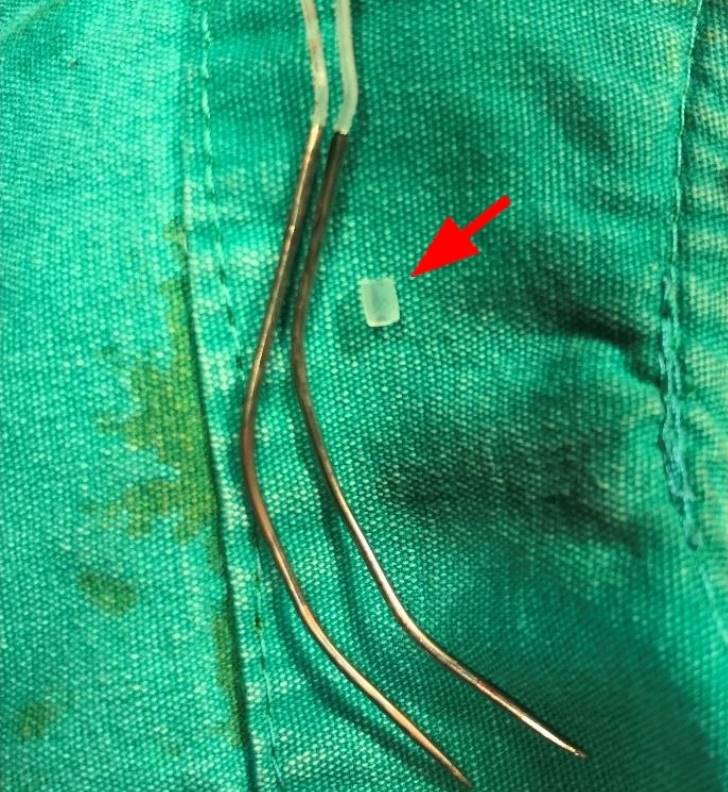
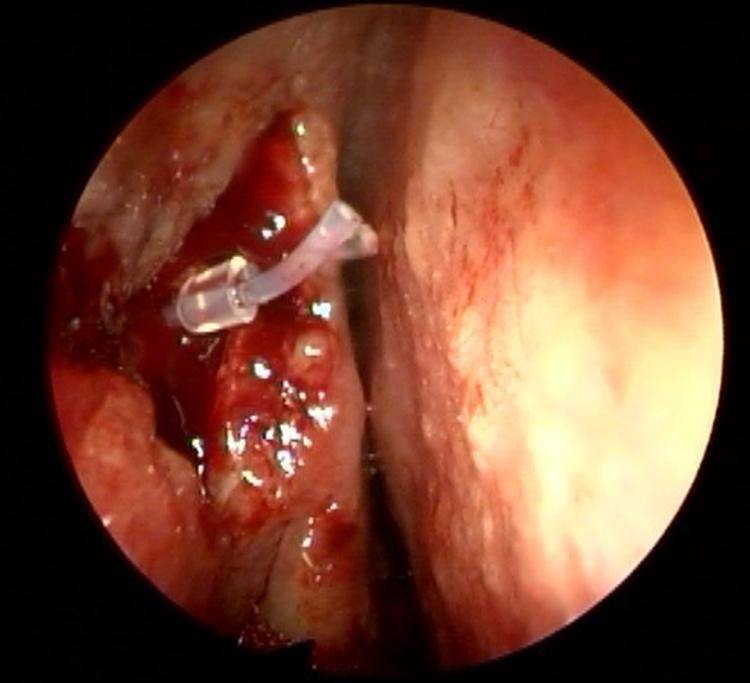
Dakriyosistorinostomi (DSR)’de silikon tüp serbest uçlarının, düğümleme yönteminden farklı bir teknik olan silikon kılıf kullanılarak sabitlendiği hastalar ile klasik düğümleme tekniği kullanılarak sabitlendiği hastaları operasyon sonrası semptomlar ve DSR başarısı açısından karşılaştırmak.

Gereç ve Yöntem: Epifora şikayeti ile başvurup kronik dakriyosistit tanısı alan ve tek taraflı endonazal DSR uygulanan 97 hastanın dosyaları tarandı. Silikon tüpün düğümlenerek sabitlendiği hastalar ve silikon kılıfla sabitlendiği hastalar olmak üzere iki grup oluşturuldu. Erken ve geç dönem kontrollerdeki sonuçlar kaydedildi. Epifora varlığı, silikon tüpe bağlı irritasyon semptomları ve lakrimal drenaj sisteminin açık olup olmaması ile ilgili bilgiler kaydedildi.

Bulgular: Silikon tüpün kanalda kalma süresi Grup 1’de daha uzundu (p=0,015). Nüks sayısında anlamlı fark görülmedi (p=0,618). Grup 1'de nüksün daha geç ortaya çıktığı görüldü (p=0,038). İrritasyon belirtileri Grup 2'de anlamlı olarak daha fazlaydı (p=0,001).

Sonuç: Silikon kılıfla sabitleme, irritasyon şikayetinin daha az olması ve daha iyi fiksasyon sağlaması açısından düğümleme yöntemine alternatif olabilir.
Atıf yapmak için : Ekici Ö, Beyoğlu A, Sevil E. A Different Technique in Silicone Tube Stabilization in Dacryocystorinostomy Surgery. 2023;3(3):132-136

Çıkar İlişkisi : Yazarlar çıkar çatışması olmadığını beyan etmiştir.

Bu makale CC BY-NC 4.0 lisansı ile yayımlanmıştır.
Mevlana Tıp Bilimleri
2023, Cilt3, Sayı3
E-ISSN: 2757-976X
Geliş Tarihi : , Kabul Tarihi : , Yayın Tarihi :

Kaynakça

  1. 1. Kakizaki, H., Kitaguchi, Y., Takahashi, Y. et al. Prevention of re-obstruction in watery eye treatment: three-flap technique in external dacryocystorhinostomy. Graefes Arch Clin Exp Ophthalmol 254, 2455–2460 (2016). https://doi.org/10.1007/s00417-016-3490-z
  2. 2. Feng Y., Cai J., Zhang J. et al. A meta-analysis of primary dacryocystorhinostomy with and without silicone intubation. Canadian Journal of Ophthalmology 46, 521–527 (2011). https://doi.org/10.1016/j.jcjo.2011.09.008
  3. 3. Watkins LM, Janfaza P, Rubin PA. The evolution of endonasal dacryocystorhinostomy. Surv Ophthalmol. 2003 Jan-Feb;48(1):73-84. https://doi.org/10.1016/S0039-6257(02)00397-1.
  4. 4. Tsirbas A. and Wormald P. J. Endonasal dacryocystorhinostomy with mucosal flaps. Am J Ophthalmol 135, 76–83 (2003). https://doi.org/10.1016/s0002-9394(02)01830-5
  5. 5. Bohman E. And Kopp E. D. One-week intubation in external dacryocystorhinostomy– a report on long-term outcome. Orbit 40, 287–291 (2021). https://doi.org/10.1080/01676830.2020.1778737
  6. 6. Cavaliere M., De Luca P., Scarpa A. et al. Longitudinal randomized study to evaluate the long-term outcome of endoscopic primary dacryocystorhinostomy with or without silicone tube. Eur Arch Otorhinolaryngol 279, 1105–1109 (2022). https://doi.org/10.1007/s00405-021-07104-w
  7. 7. Kang M.G., Shim W. S., Shin D.K., et al. A Systematic Review of Benefit of Silicone Intubation in Endoscopic Dacryocystorhinostomy. Clin Exp Otorhinolaryngol 11, 81–88 (2018). https://doi.org/10.21053/ceo.2018.00031
  8. 8. Anderson R. L. and Edwards J. J. Indications, Complications and Results with Silicone Stents. Ophthalmology 86, 1474–1487 (1979). https://doi.org/10.1016/S0161-6420(79)35374-X
  9. 9. Vahdani K., Thaller V.T., and Albanese G. Easy dacryocystorhinostomy stent fixation and removal: Use of a silicone sleeve and external stent removal from the medial canthus. Orbit 36, 175–177 (2017). https://doi.org/10.1080/01676830.2017.1280060
  10. 10. Then S. Y., O’Donnell A., Beigi B., et al. Retained Silicone Sleeve as a Cause of Dacryocystorhinostomy Failure. Ophthalmic Plast Reconstr Surg 23, 492–493 (2007), https://doi.org/10.1097/iop.0b013e3181596b80
  11. 11. Brookes J.L. and Olver J.M. Endoscopic endonasal management of prolapsed silicone tubes after dacryocystorhinostomy. Ophthalmology 106, 2101–2105 (1999) https://doi.org/10.1016/s0161-6420(99)90490-6
  12. 12. Hopkisson B. and Suharwardy J. Sleeves for fixation of Silastic nasolacrimal tubes. British Journal of Ophthalmology 79, 664–666 (1995). https://doi.org/10.1136/bjo.79.7.664
  13. 13. Al-Qahtani A.S. Primary Endoscopic Dacryocystorhinostomy with or without Silicone Tubing: A Prospective Randomized Study. Am J Rhinol Allergy 26, 332–334 (2012). https://doi.org/10.2500/ajra.2012.26.3789 .
  14. 14. Longari F., Dehgani Mobaraki P., Ricci A.L., et al. Endoscopic dacryocystorhinostomy with and without silicone intubation: 4 years retrospective study. European Archives of Oto-Rhino-Laryngology 273, 2079–2084 (2016). https://doi.org/10.1007/s00405-015-3876-2
  15. 15. Woog J. Endonasal dacryocystorhinostomy. Ophthalmology 108, 2369–2377 (2001). https://doi.org/10.1016/S0161-6420(01)00945-9.
  16. 16. Unlu H.H., Aslan A., Toprak B., et al. Comparison of Surgical Outcomes in Primary Endoscopic Dacryocystorhinostomy with and without Silicone Intubation. Annals of Otology, Rhinology & Laryngology 111, 704–709 (2002). https://doi.org/10.1177/000348940211100809
  17. 17. Hui J.I., Shriver E.M., and Tse D. T. Intubation of the Ostium and Nasolacrimal Duct With a Single Self-Linking Silicone Stent in External Dacryocystorhinostomy. Ophthalmic Plast Reconstr Surg 27, 87–89 (2011). https://doi.org/10.1097/iop.0b013e3181d09d06 .
  18. 18. Jordan D. R. and Bellan L.D. Securing Silicone Stents in Dacryocystorhinostomy. Ophthalmic Surg Lasers Imaging Retina 26, 164–165 (1995). https://doi.org/10.3928/1542-8877-19950301-18 .
  19. 19. Asghari A., Yarmohammadi M. E., Jafari F, et al. External Dacryocystorhinostomy; Success Rate and Causes of Failure in Endoscopic and Pathologic Evaluations. Iran J Pathol 12, 189–194 (2017). http://dx.doi.org/10.30699/ijp.2017.24234