Görkem Kangal,Tijen Şengezer Acar

  •  Year : 2025
  •  Vol : 5
  •  Issue : 2
  •  Page : 55-64
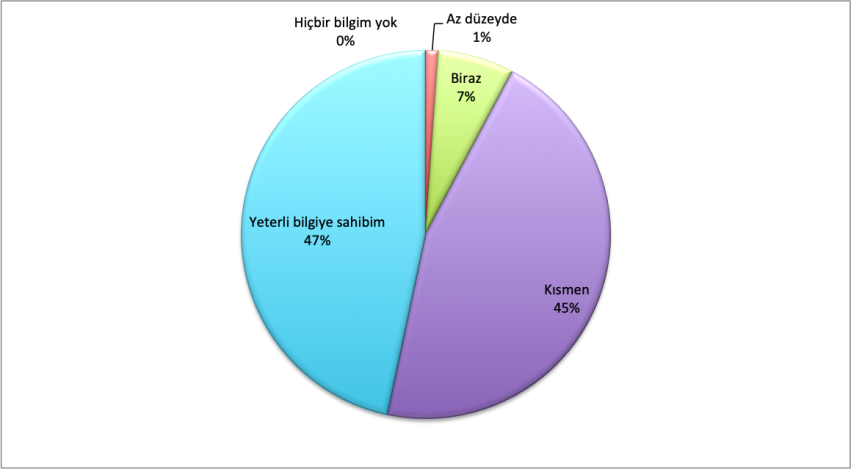
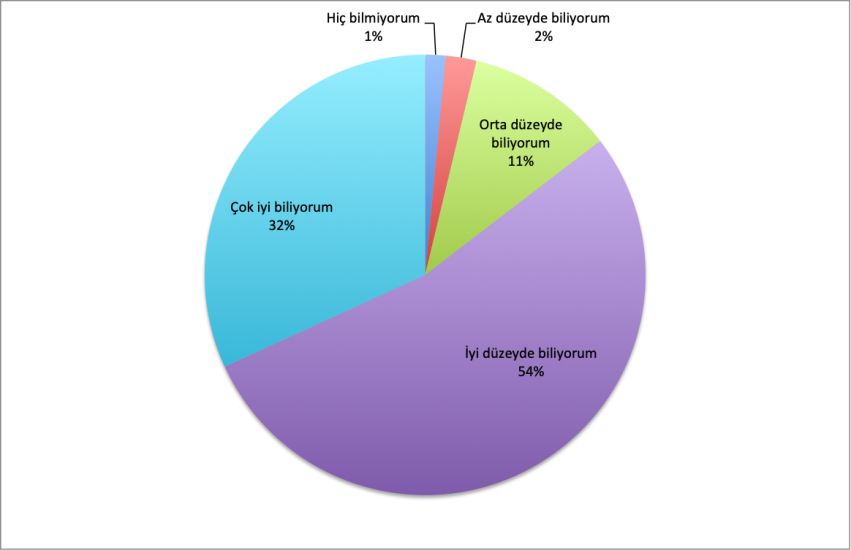
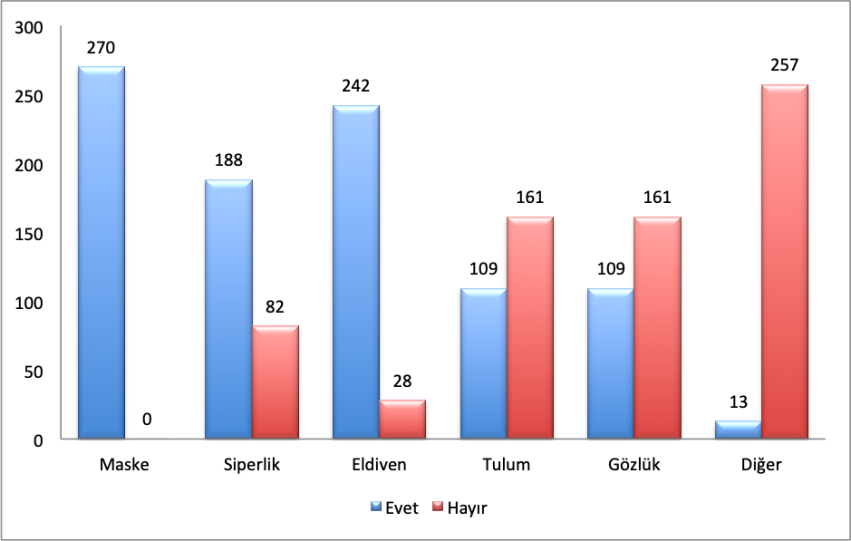
Objective: We aimed to analyze the knowledge, opinions, attitudes, and anxiety levels of family medicine healthcare workers about the COVID-19 pandemic. Methods: The study questionnaire was applied by face to face method to family medicine healthcare workers working in Family Healthcare Centers in Ankara, Turkey between 01.05.2021-30.07.2021. The survey consists of six parts; general information, general health status, COVID-19 knowledge, attitudes, opinions, the Coronavirus Anxiety Scale. Results: A total of 270 family medicine healthcare workers participated in our study. Only 22.2% have a chronic disease. Only 26.3% (n=71) had been diagnosed with COVID-19 before. Only 12.7% of the participants attended a course on COVID-19 in their institution. Those who defined themselves as having sufficient knowledge were 94.1%. The most wrong answer was about the transmission routes of COVID-19. The use of protective equipment in the workplace was in the order of frequency as masks (n=270), gloves (n=242), visor (n=188), protective gowns (n=109), goggles (n=109), and other (n=13). The rate of those who could never pay attention to the social distance at work was 8.2%. Those who strongly disagreed with the idea of serving as healthcare personnel in COVID-19 services or filiation teams were 20% (n=54), those who disagreed were 28.9% (n=78), those who were hesitant were 22.2% (n=60), those who agreed were 22.6% (n=61), and those who strongly agreed were 6.3% (n=17). The mean COVID-19 Anxiety Level of the participants was calculated as 1.9 ±2.8 points. Conclusion: The ratio of participation in information courses on COVID-19 in institutions in family medicine healthcare workers was relatively low. Despite this, knowledge level was sufficient, but they need additional information, particularly about the transmission routes. The majority also paid attention to basic protective measures. These results may guide the measures to be taken to help healthcare personnel adapt to similar emergency health crises.
Conflict of interest : The authors declare that they have no conflict of interest.

This article is published under the CC BY-NC 4.0 license.
Mevlana Tıp Bilimleri
2025, Vol5, Issue2
E-ISSN: 2757-976X
Received : , Accepted : , Published Online :

References

  1. 1. Villa S, Jaramillo E, Mangioni D, Bandera A, Gori A, Raviglione MC. Stigma at the time of the COVID-19 pandemic. Clin Microbiol Infect. 2020 Nov;26(11):1450-1452. doi: 10.1016/j.cmi.2020.08.001.
  2. 2. World Health Organization. Prevention, identification and management of health worker infection in the context of COVID-19. [Internet] Erişim Tarihi: 06 Kasım 2021. Erişim adresi: https://www.who.int/publications/i/item/10665-336265.
  3. 3. Bergwerk M, Gonen T, Lustig Y, Amit S, Lipsitch M, Cohen C, et al. COVID-19 Breakthrough Infections in Vaccinated Health Care Workers. N Engl J Med. 2021;385(16):1474-1484. doi: 10.1056/NEJMoa2109072.
  4. 4. Güler S, Topuz İ, Ulusoy F. COVID-19 Pandemisinde Aile Sağlığı Merkezi Çalışanlarının Deneyimleri. Halk Sağlığı Hemşireliği Dergisi 2020;2(3):143-151.
  5. 5. Çelik Ö, Özmemiş Ç, Balçık B, Çifçili SS. Aile Sağlığı Merkezlerinde Covid-19 aşılama sürecinin değerlendirilmesi: Tanımlayıcı bir çalışma. Jour Turk Fam Phy 2022;13(3):84-95. doi: 10.15511/tjtfp.22.00384.
  6. 6. Lee SA. Coronavirus Anxiety Scale: A brief mental health screener for COVID-19 related anxiety. Death Stud. 2020;44(7):393-401. doi: 10.1080/07481187.2020.1748481.
  7. 7. Evren C, Evren B, Dalbudak E, Topcu M, Kutlu N. Measuring anxiety related to COVID-19: A Turkish validation study of the Coronavirus Anxiety Scale. Death Stud. 2022;46(5):1052-1058. doi: 10.1080/07481187.2020.1774969.
  8. 8. Cascella M, Rajnik M, Aleem A, Dulebohn SC, Napoli RD. Features, Evaluation, and Treatment of Coronavirus (COVID-19) [Updated 2023 Agu 18]. In: StatPearls [Internet]. Treasure Island (FL): StatPearls Publishing; 2024. PMID: 32150360.
  9. 9. Wu Z, McGoogan JM. Characteristics of and important lessons from the coronavirus disease 2019 (COVID-19) outbreak in China: summary of a report of 72314 cases from the Chinese Center for disease control and prevention. JAMA. 2020;323:1239–1242. doi:10.1001/jama.2020.2648.
  10. 10. Shi Y, Wang J, Yang Y, Wang Z, Wang G, Hashimoto K, et al. Knowledge and attitudes of medical staff in Chinese psychiatric hospitals regarding COVID-19. Brain Behav Immun Health. 2020 Apr;4:100064. doi: 10.1016/j.bbih.2020.100064. Epub 2020 Mar 29.
  11. 11. Hesaraki M, Akbarizadeh M, Ahmadidarrehsima S, Moghadam MP, Izadpanah F. Knowledge, attitude, practice and clinical recommendations of health care workers towards COVID-19: a systematic review. Rev Environ Health. 2020;36(3):345-357. doi: 10.1515/reveh-2020-0099.
  12. 12. Giao H, Han NTN, Khanh TV, Ngan VK, Tam VV, An PL. Knowledge and attitude toward COVID-19 among healthcare workers at district 2 Hospital, Ho Chi Minh City. Asian Pac J Trop Med 2020;13(6):260-265. doi: 10.4103/1995-7645.280396.
  13. 13. Bhagavathula AS, Aldhaleei WA, Rahmani J, Mahabadi MA, Bandari DK. Knowledge and Perceptions of COVID-19 Among Health Care Workers: Cross-Sectional Study. JMIR Public Health Surveill. 2020;6(2):e19160. doi: 10.2196/19160.
  14. 14. Bulut C, Kato Y. Epidemiology of COVID-19. Turk J Med Sci. 2020 Apr 21;50(SI-1):563-570. doi: 10.3906/sag-2004-172.
  15. 15. To KK, Sridhar S, Chiu KH, Hung DL, Li X, Hung IF, et al. Lessons learned 1 year after SARS-CoV-2 emergence leading to COVID-19 pandemic. Emerg. Microbes Infect. 2021 Dec;10(1):507-535. doi: 10.1080/22221751.2021.1898291
  16. 16. Khan M, Adil SF, Alkhathlan HZ, Tahir MN, Saif S, Khan M, et al. COVID-19: A Global Challenge with Old History, Epidemiology and Progress So Far. Molecules. 2020;26(1):39. doi: 10.3390/molecules26010039.
  17. 17. World Health Organization. Coronavirus disease (COVID-19). [Internet] Erişim Tarihi: 24 Kasım 2021. Erişim adresi: https://www.who.int/health-topics/coronavirus#tab=tab_2
  18. 18. T.C. Sağlık Bakanlığı COVID-19 Bilgilendirme Platformu. [Internet] Erişim Tarihi: 24 Kasım 2021. Erişim adresi: https://covid19.saglik.gov.tr/TR-66260/saglik-personeline-yonelik.html
  19. 19. Erpolat MN, Faydalı S. Pandemi sürecinde hemşirelerin izolasyon yöntemlerine uyum düzeyleri ve etkileyen faktörler. Mev Med Sci. 2024; 4 (3): 119-126. doi: 10.56752/Mevmedsci.2024.72 .
  20. 20. Ejeh FE, Saidu AS, Owoicho S, Maurice NA, Jauro S, Madukaji L, et al. Knowledge, attitude, and practice among healthcare workers towards COVID-19 outbreak in Nigeria. Heliyon 2020;6(11):e05557. doi: 10.1016/j.heliyon.2020.e05557.
  21. 21. T.C. Sağlık Bakanlığı Bilimsel Danışma Kurulu Çalışması. COVID-19 Pandemisinde Sağlık Kurumlarında Çalışma Rehberi ve Enfeksiyon Kontrol Önlemleri. 9 Mart 2021. [Internet] Erişim Tarihi: 24 Kasım 2021. Erişim adresi: https://covid19.saglik.gov.tr/Eklenti/40282/0/covid19-saglikkurumlarindacalismarehberiveenfeksiyonkontrolonlemleripdf.pdf .
  22. 22. Imasuen H, Nzomiwu CL. The Knowledge of COVID-19 among Health Care Workers in a Nigerian Urban Community and their Willingness to Manage COVID-19 Patients. West Afr J Med. 2021;38(9):859-865.
  23. 23. Saadatian-Elahi M, Amour S, Elias C, Henaff L, Dananché C, Vanhems P. Tobacco smoking and severity of COVID-19: Experience from a hospital-based prospective cohort study in Lyon, France. J Med Virol. 2021;93(12):6822-6827. doi: 10.1002/jmv.27233.
  24. 24. Puebla Neira D, Watts A, Seashore J, Polychronopoulou E, Kuo YF, Sharma G. Smoking and risk of COVID-19 hospitalization. Respir Med. 2021 Jun;182:106414. doi: 10.1016/j.rmed.2021.106414.
  25. 25. Prinelli F, Bianchi F, Drago G, Ruggieri S, Sojic A, Jesuthasan N, et al. Association Between Smoking and SARS-CoV-2 Infection: Cross-sectional Study of the EPICOVID19 Internet-BASÇd Survey. JMIR Public Health Surveill. 2021 Apr 28;7(4):e27091. doi: 10.2196/27091.
  26. 26. Farsalinos K, Barbouni A, Poulas K, Polosa R, Caponnetto P, Niaura R. Current smoking, former smoking, and adverse outcome among hospitalized COVID-19 patients: a systematic review and meta-analysis. Ther Adv Chronic Dis. 2020 Jun 25;11:2040622320935765. doi: 10.1177/2040622320935765.
  27. 27. Vardavas C, Nikitara K. COVID-19 and smoking: A systematic review of the evidence. Tob Induc Dis. 2020;18:20. doi: 10.18332/tid/119324.
  28. 28. Patanavanich R, Glantz SA. Smoking is associated with COVID-19 progression: A meta-analysis. Nicotine Tob Res. 2020;22(9):1653–1656. doi: 10.1093/ntr/ntaa082.
  29. 29. van de Venter R, Williams R, Stindt C, Ten Ham-Baloyi W. Coronavirus-related anxiety and fear among South African diagnostic radiographers working in the clinical setting during the pandemic. J Med Imaging Radiat Sci. 2021 Dec;52(4):586-594. doi: 10.1016/j.jmir.2021.09.016.
  30. 30. Kameg BN, Fradkin D, Lee H, Mitchell A. Mental wellness among psychiatric-mental health nurses during the COVID-19 pandemic. Arch Psychiatr Nurs. 2021;35(4):401-406. doi: 10.1016/j.apnu.2021.05.003. Epub 2021 May 11.
  31. 31. Ahn J, Lee J, Hong Y, Park J, Chung S. Stress and Anxiety to Viral Epidemics-6 for Medical Students: Psychometric Properties of the Anxiety Measure for the COVID-19 Pandemic. Front Psychiatry. 2021;12:705805. doi: 10.3389/fpsyt.2021.705805.