Cellulitis is an acute bacterial infection of the skin's deeper layers. Clinical indicators such as redness, swelling, warmth, and tenderness manifest at the site of infection . If left untreated, cellulitis can lead to serious complications, necrosis, abscess, and osteomyelitis . The most frequently isolated bacteria are Streptococcus pyogenes and Staphylococcus aureus (S. aureus). These bacteria species often exploit breaches in the skin's integrity to gain entry to tissue. In rare cases, cellulitis may extend to contiguous
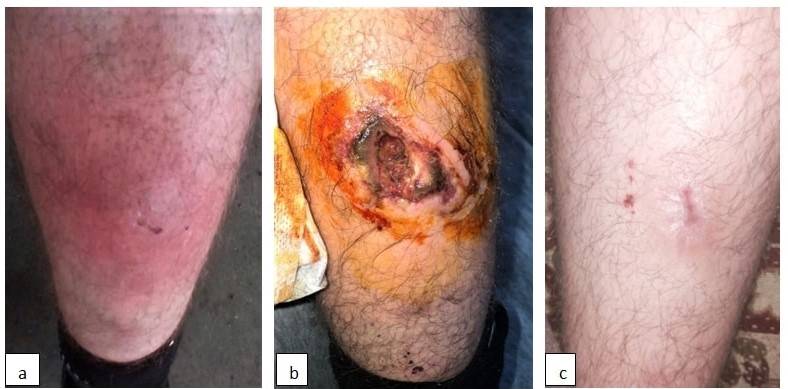
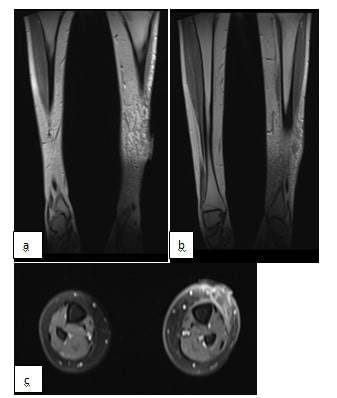
tissues, precipitating abscess formation or osteomyelitis. We present a case of cellulitis on the anterior left tibia, resulting from trauma, which progressed to abscess formation and surrounding tissue necrosis. A 17-year-old male with no prior medical history presented with swelling and redness 10 days after sustaining a fall down stairs. Despite initial cellulitis diagnosis, the infection worsened, yielding Staphylococcus aureus growth in wound culture and necessitating treatment for necrotic soft tissue infection. Our case was successfully treated without any complications. First-generation cephalosporins and antistaphylococcal penicillins are commonly the initial choices for treating skin and soft tissue infections. However, they may not effectively combat infections caused by methicillin-resistant S.aureus (MRSA). While antibiotic selection is paramount, supportive measures such as removing infected foreign bodies, surgically draining lesions like abscesses, and ensuring regular wound cleansing are crucial for achieving successful recovery. In conclusion, clinical evaluation remains crucial in managing skin and soft tissue infections because laboratory results may not fully reflect the patient's condition. Empirical antibiotic therapy should be initiated immediately, taking into account the severity of the lesion, clinical condition, and likely pathogens. Obtaining cultures from the affected area helps identify the pathogen and determine antibiotic resistance patterns, guiding the treatment plan accordingly.
Cite this Article As : Korkmaz F, Ak H, Genceli M, Metin Akcan O, Kerimoglu U. Cellulitis-Abscess Developing Secondary to Trauma. Mev Med Sci. 2024; 4(2): 99-101
Conflict of interest : The authors declare that they have no conflict of interest.
Mevlana Tıp Bilimleri 2024, Vol4, Issue2 E-ISSN: 2757-976X
Received : , Accepted : , Published Online :
References
1. Bystritsky RJ. Cellulitis. Infect Dis Clin North Am 2021;35(1):49-60. 2. Morris AD. Cellulitis and erysipelas. BMJ Clin Evid 2008;2:1708. 3. Mahmutoğlu ÇS, Yılmaz KF, Vahaboğlu MH. Rekürren alt ekstremite selülitlerinde risk faktörlerinin değerlendirilmesi ve laboratuvar ile klinik bulguların tedavi yanıtına etkisi. Ortadogu Tıp Derg 2019;11(4):477-83. 4. Gül Ü. Derinin sık görülen bakteriyel enfeksiyonları. Ankara Med J 2016;16(1):98‐114. 5. Ladhani S, Garbash M. Staphylococcal skin infections in children: rational drug therapy recommendations. Paediatr Drugs 2005;7(2):77-102. 6. Hedrick J. Acute bacterial skin infections in pediatric medicine: curren tissues in presentation and treatment. Paediatr Drugs 2003;5(11):35-46. 7.Peetermans M, de Prost N, Eckmann C, Norrby-Teglund A, Skrede S, De Waele JJ. Necrotizing skin and soft-tissue infections in the intensive care unit. Clin Microbiol Infect 2020;26(1):8-17. 8. Peebles E, Morris R, Chafe R. Community-associated methicillin-resistant Staphylococcus aureus in a pediatric emergency department in Newfoundlandand Labrador. Can J Infect Dis Med Microbiol 2014;25(1):13-6.
 Case Report
 View as PDF
 KeywordsTrauma, cellulitis, abscess, Staphylococcus Aureus